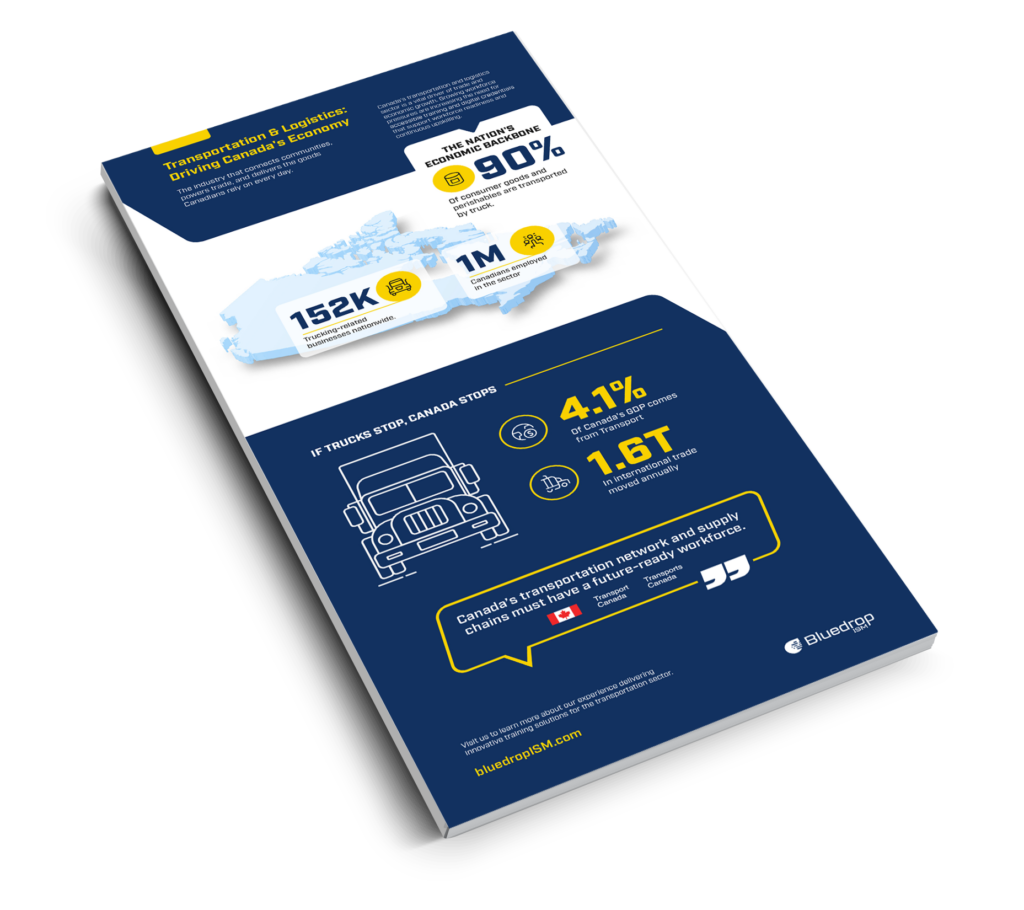







Canada’s transportation and logistics sector is one of the country’s most important economic engines. Contributing more than $92 billion annually to GDP, employing over one million Canadians, and supporting the movement of more than $1.5 trillion in trade, the sector plays a foundational role in Canada’s prosperity.
Yet despite its importance, transportation faces a growing workforce challenge that extends far beyond recruitment.
According to industry estimates, labour shortages are costing the Canadian economy more than $4.3 billion annually, impacting productivity, capacity, competitiveness, and supply chain resilience. At the same time, the industry continues to grapple with more than 11,000 vacant truck driver positions, an aging workforce where nearly one-third of drivers are over age 55, and a projected need for more than 40,000 additional workers by 2030.
These statistics are often presented as a hiring problem. In reality, they actually represent a workforce development challenge.
This reality was reinforced during discussions at the recent Canadian Council of Motor Transport Administrators (CCMTA) Annual Meeting, where workforce sustainability emerged as a recurring theme across conversations involving regulators, industry leaders, employers, and training stakeholders.
While recruitment remains a priority, many of the conversations pointed toward a broader issue: attracting workers is only the first step. The greater challenge lies in preparing them for success, supporting their development throughout their careers, and ensuring they can adapt to an industry undergoing rapid change.
Transportation professionals today face increasingly complex expectations. Beyond operating vehicles safely, workers must navigate evolving regulations, digital technologies, electronic logging systems, safety management requirements, customer expectations, and emerging operational practices.
As the industry evolves, workforce development can no longer be viewed as a one-time onboarding exercise.
It must become a continuous process.
Historically, workforce development within transportation has largely been employer-led. While many organizations have developed effective internal training programs, the industry’s highly fragmented structure presents challenges.
More than 90 percent of Canadian trucking companies operate small fleets, often with limited resources to develop and maintain comprehensive onboarding, compliance, and professional development programs.
As a result, training quality, delivery methods, and skills verification processes can vary significantly across employers and jurisdictions.
At the same time, operational pressures continue to limit opportunities for ongoing learning. Drivers, dispatchers, warehouse staff, and supply chain professionals are expected to maintain productivity while adapting to new technologies, regulations, and customer requirements.
The result is a growing gap between workforce demands and workforce development capacity.
Our recent infographic on Canada’s transportation workforce highlights the growing gap between labour demand and workforce readiness. While the numbers themselves are significant, they point to a broader challenge: the industry’s long-term sustainability will depend on its ability to develop, retain, and continuously upskill talent at scale.
Key Industry Realities
📉 $4.3 Billion
Estimated annual economic impact of transportation labour shortages in Canada.
🚛 11,000+ Vacancies
Truck driver positions remain unfilled across the country.
👥 32% of Drivers Are Age 55+
A significant portion of the workforce is approaching retirement.
📈 40,400 New Workers Needed by 2030
Projected workforce demand to sustain industry growth and replace retirees.
Organizations across Canada are increasingly recognizing that workforce readiness is not simply a human resources issue—it is a business performance issue.
Workforce readiness influences:
In an environment where labour remains scarce, organizations that can effectively onboard, develop, and retain workers gain a significant competitive advantage.
The question is no longer whether workforce development matters.
The question is whether current approaches are sufficient to meet future demand.
The transportation sector has an opportunity to rethink how workforce development is delivered.
Rather than relying exclusively on individual employers to develop training independently, there is growing value in scalable, industry-supported approaches that improve consistency while remaining flexible enough to meet local and organizational needs.
Accessible online learning, competency-based training pathways, industry-informed curriculum, and portable digital credentials are helping organizations modernize workforce development. These approaches make it easier to deliver training at scale, support continuous learning, recognize skills across organizations, and provide workers with clear pathways for advancement.
Most importantly, they help ensure that workforce development keeps pace with industry change.
What Modern Workforce Development Looks Like
✓ Industry-aligned training content
✓ Accessible, on-demand online learning
✓ Consistent onboarding and workforce readiness
✓ Continuous upskilling and professional development
✓ Portable, verifiable credentials
✓ Scalable delivery across employers and jurisdictions
At Bluedrop ISM, we’ve spent years working alongside transportation stakeholders to address workforce development challenges through modern training delivery and credential management solutions.
Our experience spans collaborations with provincial governments, regulators, industry associations, sector councils, and safety organizations to design and deliver industry-wide training initiatives that improve workforce readiness and support safer operations. From Saskatchewan’s online MELT program and Ontario’s Air Brakes Refresher Course to Nova Scotia’s dispatcher micro-credential program and national driver training initiatives developed alongside the Canada Safety Council, we’ve seen firsthand the impact that accessible, industry-informed training can have on workforce outcomes.
More recently, we partnered with Alberta Transportation to co-develop the self-paced online entry component of the Province’s Class 1 Driver Learning Pathway, helping create a more flexible and accessible approach to commercial driver training.
What these initiatives have in common is a recognition that workforce development cannot be addressed one organization at a time. It requires scalable solutions that can engage employers, support workers throughout their careers, and deliver consistent learning experiences across jurisdictions and industry segments.
Through our SkillsPass platform and custom eLearning solutions, we’ve helped partners create hundreds of hours of transportation-focused training, support thousands of dispersed workers and job seekers, and generate millions of training outcomes and digital credentials.
Our continued engagement with transportation leaders, including participation in events such as the CCMTA Annual Meeting, reinforces a belief we’ve held for years: the future of transportation depends not only on attracting workers, but on creating modern, accessible pathways that help them learn, adapt, and succeed throughout their careers.
Canada’s transportation sector has always been defined by its ability to adapt and innovate. Meeting today’s workforce challenges will require the same mindset.
The future of transportation depends not only on moving goods efficiently—it depends on developing the skilled, adaptable workforce that keeps Canada’s supply chains moving.
As labour shortages, technological change, and evolving workforce expectations continue to reshape the industry, organizations that invest in workforce readiness today will be best positioned to thrive tomorrow.
Learn more about Bluedrop ISM’s experience delivering innovative workforce development and training solutions for the transportation sector.

Simply complete the form below and a Bluedrop ISM team member will contact you to arrange your 30 minute power demo of the SkillsPass training platform and our related workforce training solutions.
Free Trial!
Simply complete the form below. A SkillsPass team member will contact you with the details for your 90-day free, no-obligation trial of SkillsPass- including setup, activation, feature walk-through, and the various terms and conditions that apply.
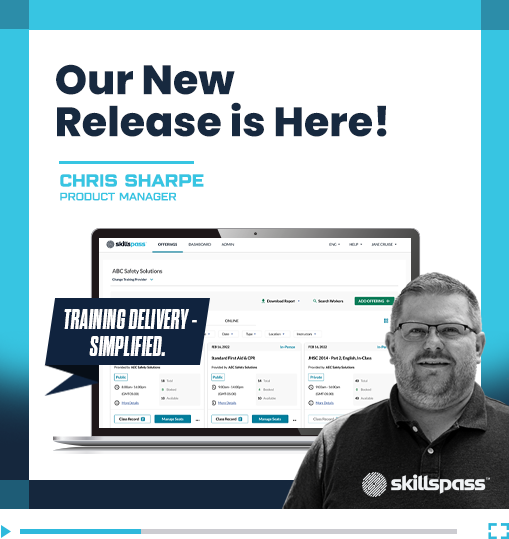
Bluedrop’s experience and proven eLearning content development capabilities are foundational in supporting our customers’ upskilling & reskilling requirements, and in maximizing the power of the SkillsPass™ Integrated Skills Management Platform.

Whether for broad State/Province upskilling programs, or single use, rapid response training requirements for a specific industry requirement- we can deliver an online solution with proven effectiveness and verifiable training results.
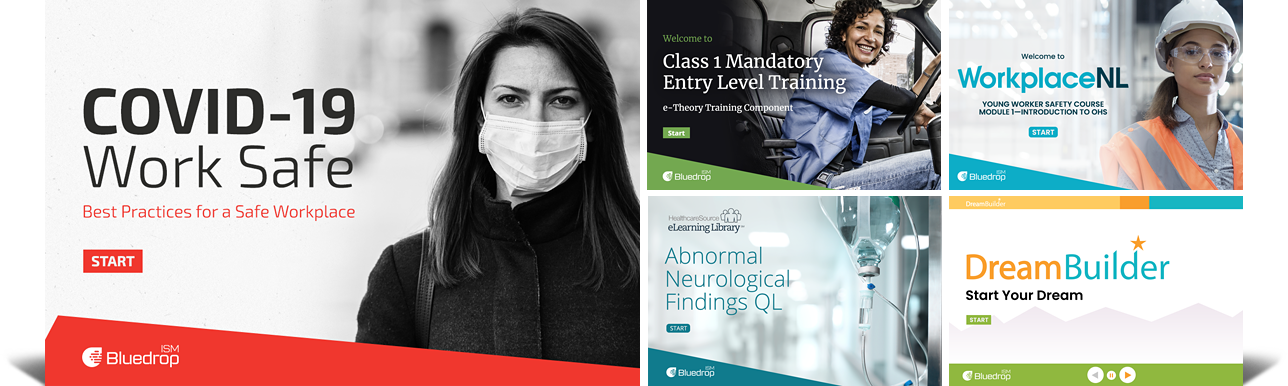

Bluedrop has developed and deployed eLearning training to support large and diverse upskilling and reskilling initiatives of governments and industries around the globe.

Bluedrop has amassed a a vast library of proven and impactful eLearning courses. Specialization includes commercial truck driver training, workplace productivity, entrepreneurship and a host of regulatory inspired courses,

The eLearning content solution combined with our SkillsPass ISM platform to help connect workers, employers, and related stakeholders. We also offer full execution support and program management including marketing, adoption, and customer support specialists that help drive successful uptake and results.

Offers online training, certification, and credential management capabilities to support the transformation of broad-based upskilling/reskilling.

Is industry-agnostic, and is now securely deployed with governments, industry associations and employers around the world, with close to 3 Million users.

Enables the deployment of wide ranging course content options to support skill development including industry mandated, OH&S, and upskilling in those critical in-demand functions required in the new digital economy.

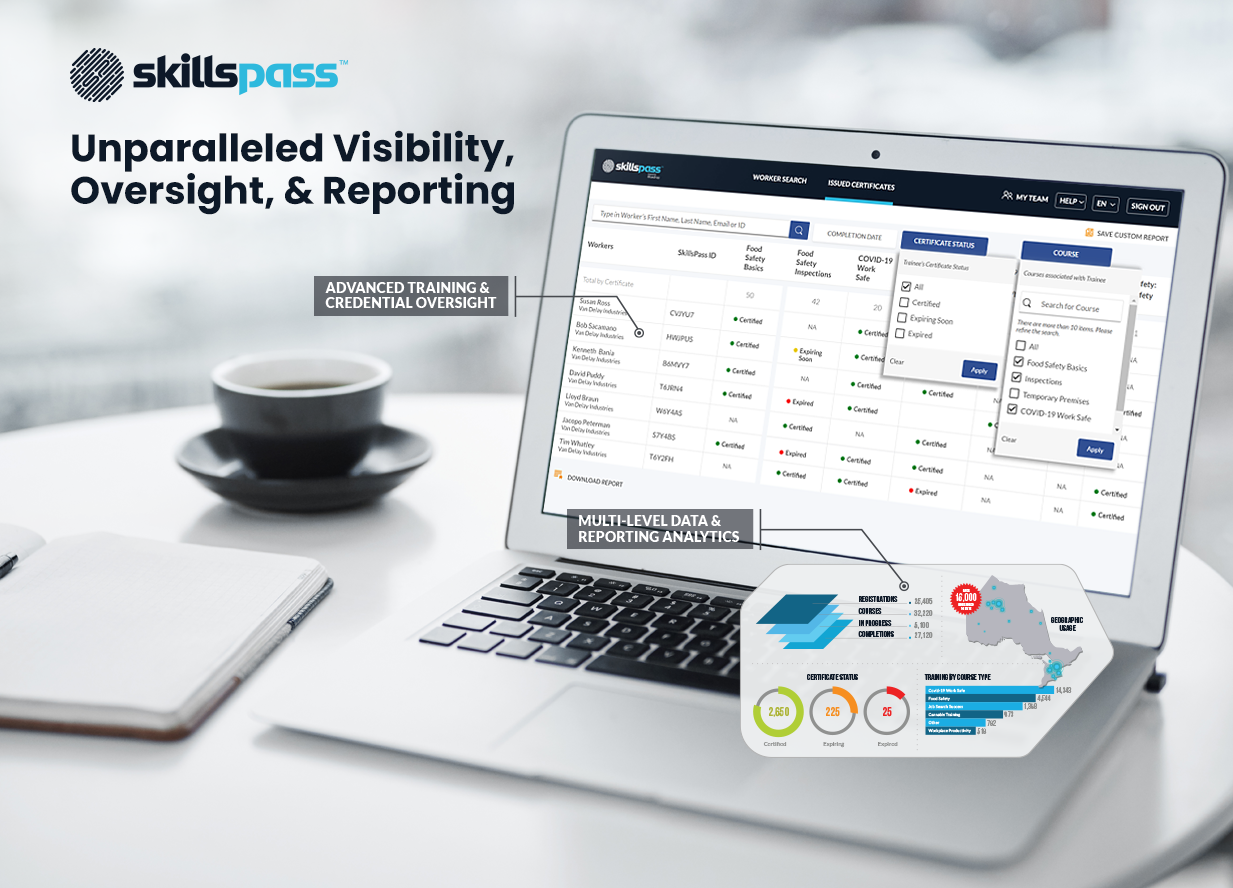
Provides partners with a digital, single line-of-sight into training results, credentials, and certifications at the industry through to the individual level.
SAFEGUARD
With security and support that safeguards our client investments in two key ways:
DELIVER
Providing end-to-end training delivery and credential management for all training formats…
REIMAGINE
A seamless online training ecosystem connection for all stakeholders or partners…
Giving Bank:
Eligibility Requirements (None)
Connect with us and send us your information – we’re happy to learn more and explore whether we are a fit.
Community Events:
Eligibility Requirements (None)
Connect with us and send us your information – we’re happy to learn more and explore whether we are a fit.
Supporting Refugees and Recent Immigrants :
Eligibility Requirements
Applications can be received from the following:
Applications can be received from the following:
Eligibility Requirements